
7 Hidden Reasons Blood Sugar Spikes
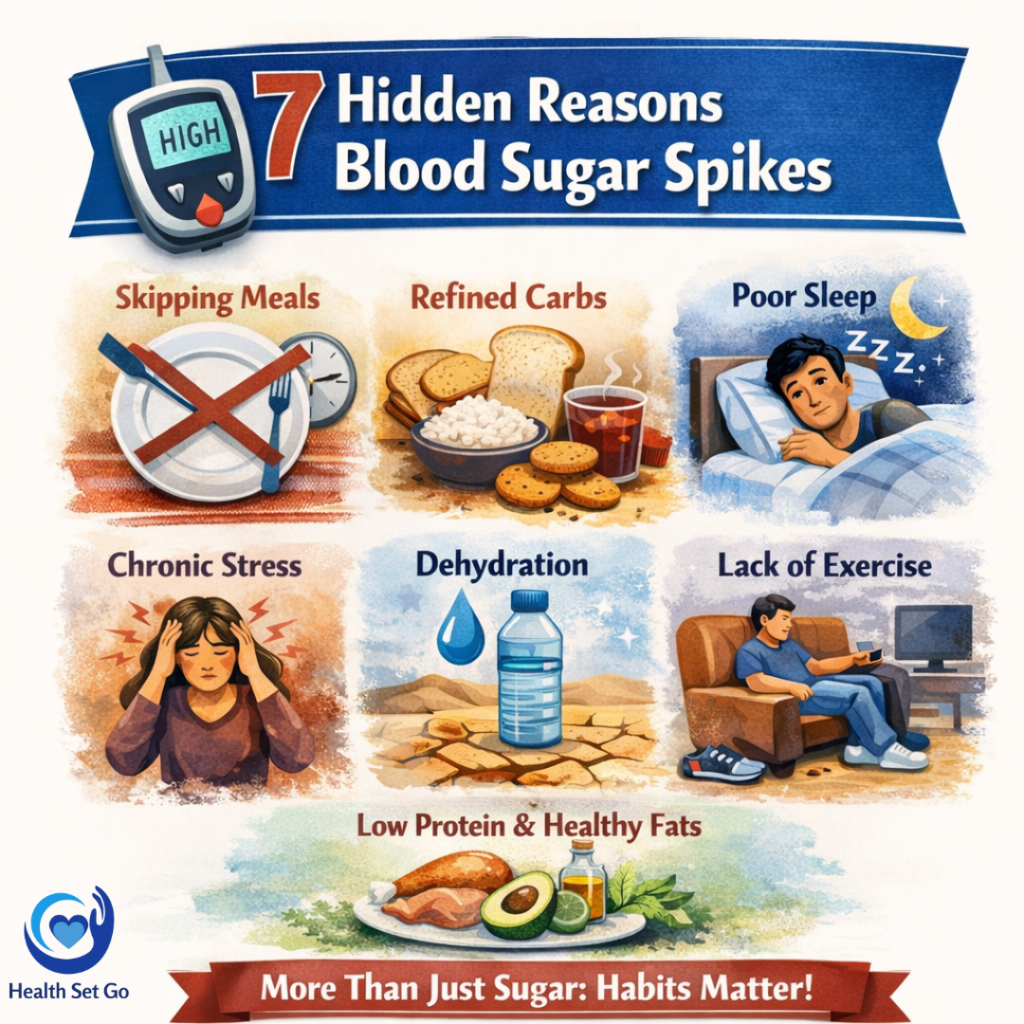

There are seven reasons I routinely see behind rising blood sugar levels, and most of them have nothing to do with eating sweets.
This often surprises people. Patients walk in convinced they have “done something wrong” because their readings are high despite avoiding sugar, controlling portions, and following advice sincerely. What gets overlooked is that blood glucose is regulated by hormones, timing, sleep, stress, and muscle activity just as much as food. When these factors are ignored, sugar levels rise quietly and persistently.
One of the most common patterns I see is irregular eating. Skipping meals or pushing them late may look disciplined, but the body experiences it as stress. When food is delayed, stress hormones such as cortisol and glucagon rise. These hormones stimulate the liver to release stored glucose into the bloodstream. This means blood sugar can increase even when a person has not eaten. When food finally comes in, the insulin response is weaker, and the spike becomes more pronounced.
Another frequent trigger is the kind of carbohydrates consumed. Refined foods behave very differently inside the body than most people expect. Items like white rice, bread, biscuits, sweet drinks, and packaged snacks are broken down extremely fast. Blood sugar rises quickly and then falls just as fast. That sudden drop is what triggers hunger and repeated cravings later in the day. Many people concentrate on eating smaller portions, but often it is the speed at which a food turns into sugar that creates the real problem.
Meal composition plays a quieter but equally important role. Meals that are low in protein and healthy fats tend to spike blood sugar even when they appear light or “safe.” Protein slows digestion and improves insulin response. Fats delay glucose absorption. Without them, carbohydrates rush into the bloodstream faster than the body can handle.
Sleep is frequently ignored when blood sugar is discussed, yet its impact is very real. After a night of poor sleep, the body becomes less efficient at handling glucose. Sugar remains in circulation longer, leading to higher fasting and post-meal readings. When this pattern continues, stress hormones stay high, and blood sugar rises despite careful eating.
Stress itself has a direct metabolic effect. The body does not distinguish between physical danger and emotional pressure. Work stress, anxiety, and constant mental load activate cortisol and adrenaline release. These hormones raise blood sugar to prepare the body for action, even when no physical activity occurs. This is why glucose often worsens during stressful phases without any dietary change.
Hydration also matters more than most people realise. When fluid intake is low, glucose becomes more concentrated in the bloodstream. Dehydration reduces the kidneys’ ability to excrete excess sugar, leading to subtly higher readings. In busy routines and hot climates, mild dehydration is extremely common and often unnoticed.
Finally, what happens after a meal can determine how high sugar rises. Muscles are one of the body’s most effective tools for clearing glucose from the blood. Sitting or lying down immediately after eating allows sugar to circulate longer. Light movement, even a short walk, helps muscles absorb glucose with less reliance on insulin.
A clinical perspective
Blood sugar spikes are rarely caused by a single mistake or a lack of discipline. They usually reflect a combination of habits that slowly push the body out of balance. When glucose readings remain unpredictable, it is not a personal failure. It is a signal that physiology is being ignored in favour of simplistic rules.
Stable blood sugar comes from alignment – regular meals, balanced plates, adequate sleep, stress control, hydration, and movement. When these are addressed together, control improves without extremes.